
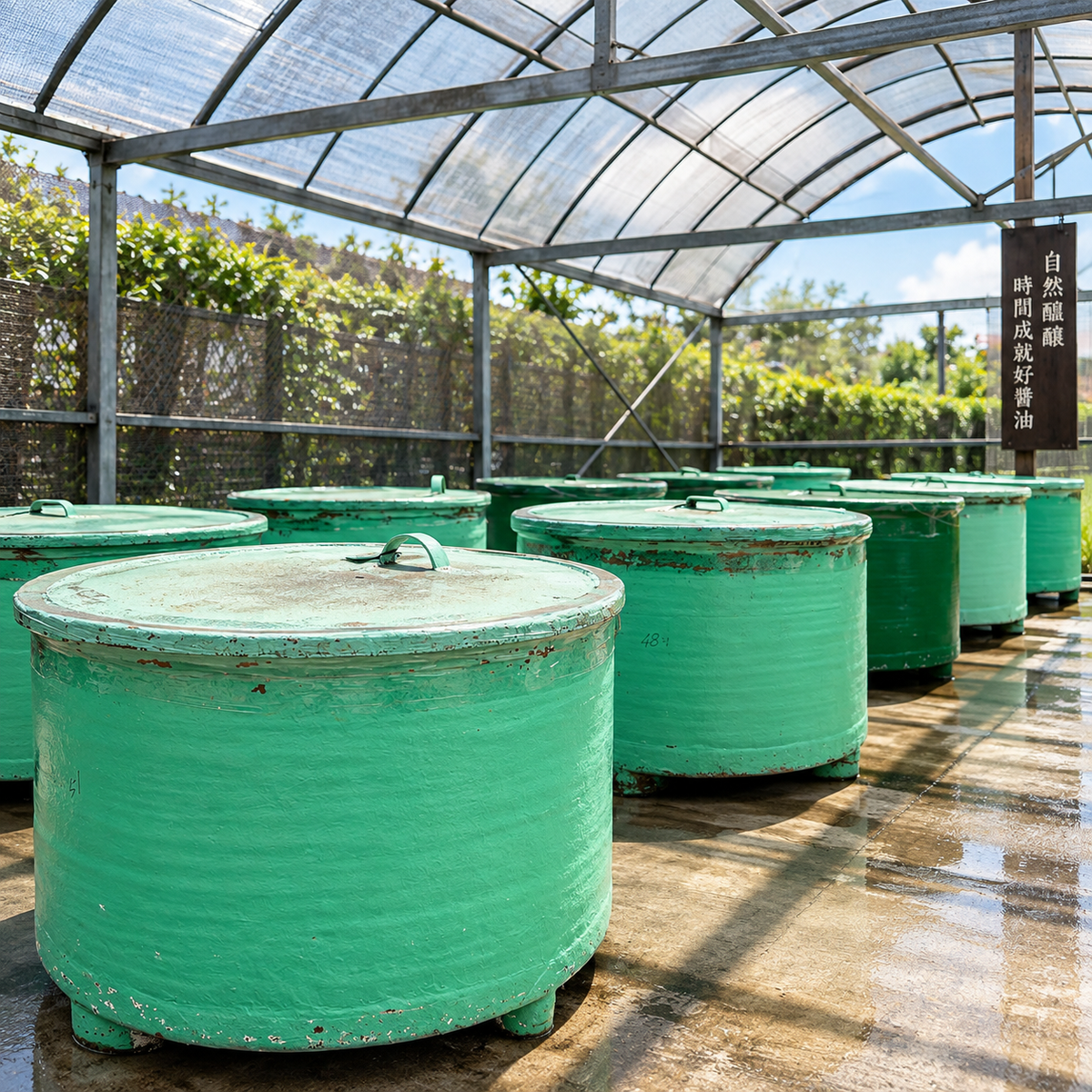
Soy sauce may look simple in the bottle, but creating its aroma, depth, and umami takes time.
At DoYouBo, soy sauce brewing combines traditional Taiwanese craftsmanship with modern production management. From preparing whole soybeans and making koji to adding brine and allowing the mixture to ferment for months, each stage plays an important role in developing the final flavor.
Here is a closer look at how DoYouBo turns soybeans into naturally brewed Taiwanese soy sauce.
It Starts with Taiwan-Grown Ingredients
Great soy sauce begins with carefully selected ingredients.
DoYouBo works with local farmers in Taiwan through contract farming and uses locally grown non-GMO grains, including soybeans, black soybeans, small black soybeans, and wheat across its soy sauce range.
Working closely with local agriculture allows us to build a stronger connection between the ingredients, the farmers who grow them, and the soy sauce produced in Pingtung.
For DoYouBo, brewing soy sauce begins long before fermentation—it begins in the fields.
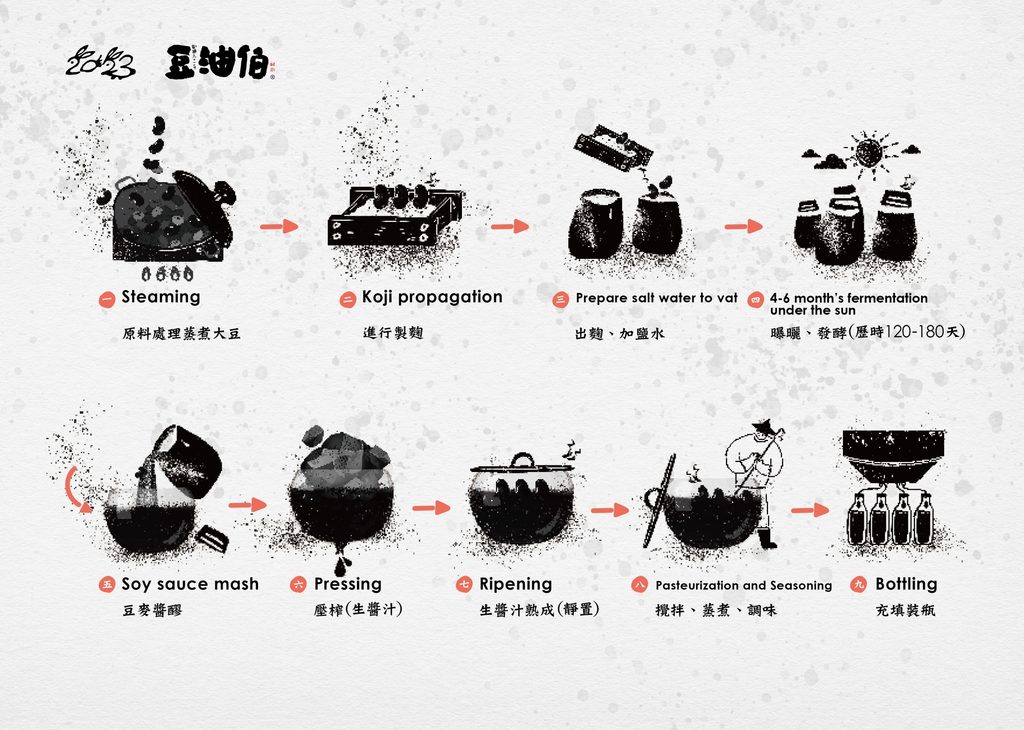
Step 1|Preparing and Cooking the Soybeans
The brewing process begins with whole soybeans.
At DoYouBo, the soybeans are cooked with water for approximately 40 minutes until they reach the appropriate texture for the next stage of brewing.
After cooking, a small amount of roasted wheat is added before the soybeans are transferred to the koji-making room.
This prepares the ingredients for one of the most important stages in soy sauce brewing: koji making.
Step 2|Making Koji
Koji plays a key role in developing the character of naturally brewed soy sauce.
After the soybeans are cooked and combined with roasted wheat, they are transferred to a dedicated koji-making room for approximately 2 to 3 days.
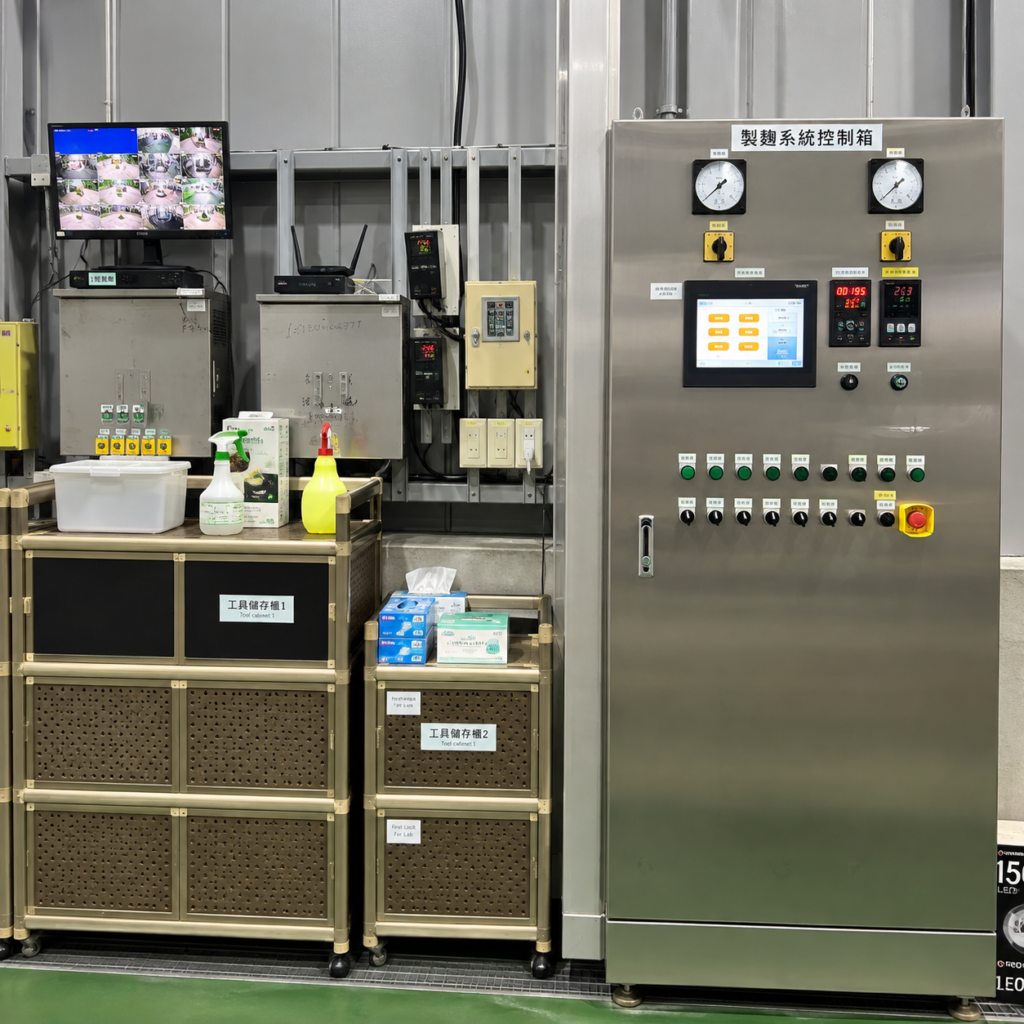
At DoYouBo, the koji room uses a computerized temperature-control system to provide stable conditions for koji development.
This stage requires careful management because the quality of the koji has a major influence on the aroma and flavor that develop later during fermentation.
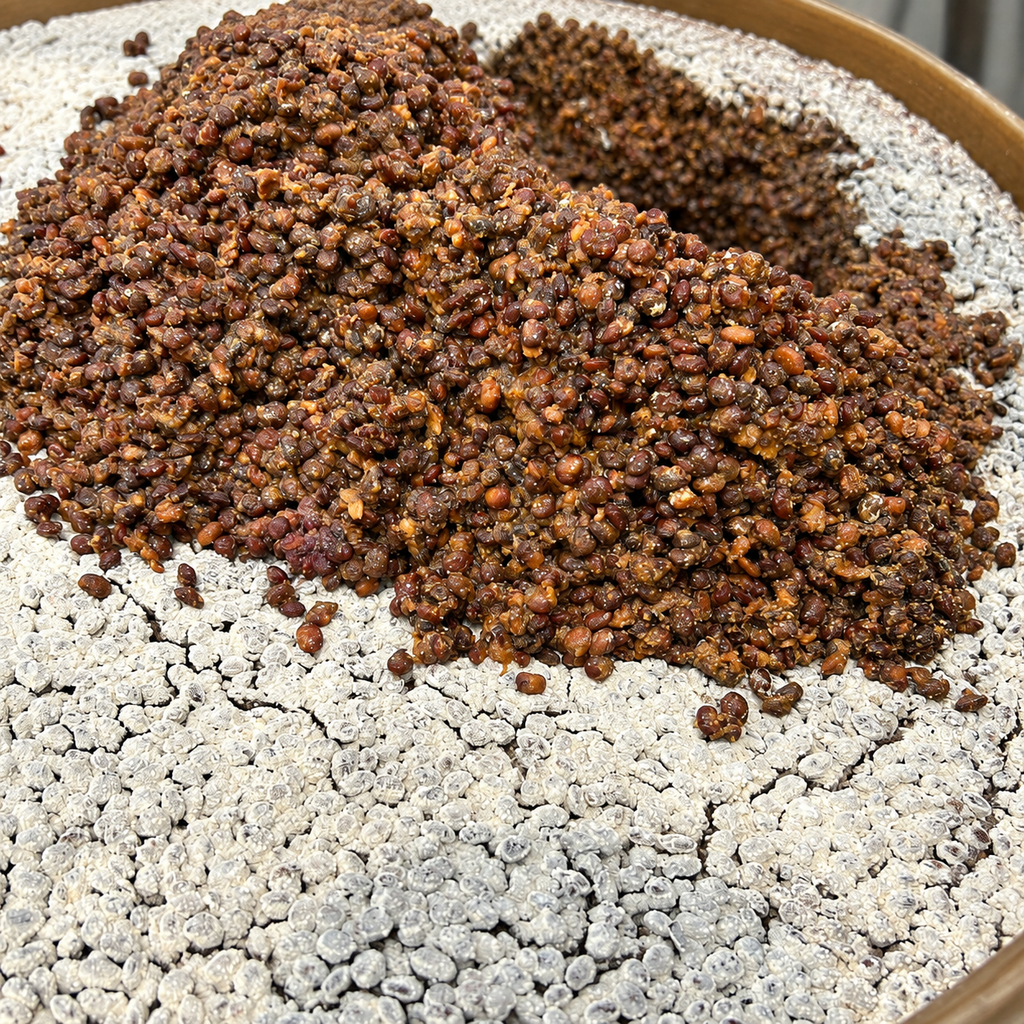
Step 3|Adding Brine
Once the koji-making stage is complete, the soybean koji is transferred into food-grade FRP brewing tanks.
A carefully measured amount of brine is then added.
During this process, the mixture must be continuously stirred so that the koji and brine are evenly combined.
It may sound simple, but mixing cooked soybeans and liquid in a large brewing tank requires both physical strength and experience.
This is one of the moments where traditional craftsmanship remains an important part of the brewing process.
Step 4|Time for Fermentation
Once the brine has been added, the brewing tanks are sealed and the long fermentation process begins.
DoYouBo soy sauce is naturally fermented for at least 120 days, with some products requiring 120 to 180 days, depending on the recipe and ingredients.
Rather than relying on a rapid production process, time allows the ingredients to gradually develop the aroma, color, and depth associated with naturally brewed soy sauce.
There is no shortcut for this stage.
Good soy sauce needs time.
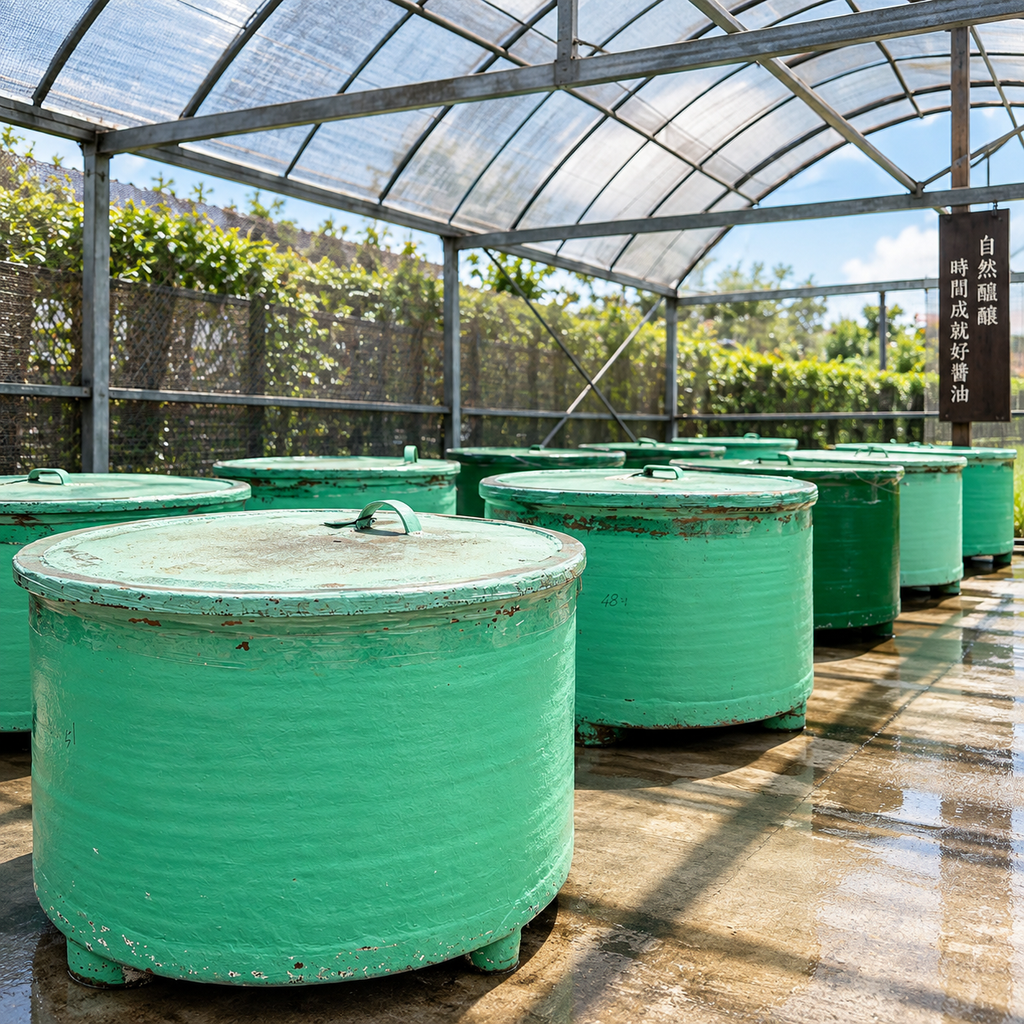
Step 5|Monitoring the Fermentation
The brewing tanks are not simply sealed and forgotten.
Throughout the fermentation period, the production team periodically opens the tanks to check and stir the fermenting mixture.
These inspections are carried out in a controlled environment designed to maintain hygienic conditions during the brewing process.
Fermentation is a living process, so experience and careful observation remain important even with the support of modern equipment.
Traditional Craftsmanship Meets Modern Technology
Soy sauce brewing has a long history, but the environment surrounding food production continues to change.
At DoYouBo, traditional brewing methods are supported by modern equipment and production management to help maintain stable fermentation conditions, quality, and production capacity.
Computer-controlled koji rooms, food-grade brewing tanks, carefully managed production environments, and experienced brewers all play different roles in the same process.
Technology does not replace craftsmanship.
Instead, it helps create a more stable environment in which traditional brewing knowledge can continue.
At Least 120 Days Before the Next Step
After at least four months of fermentation, the soy sauce is ready to move on to the next stage: pressing the fermented mash to extract raw soy sauce.
But by this point, much of the character of the soy sauce has already been shaped by the ingredients, koji, fermentation environment, and—most importantly—time.
From Taiwan-grown grains to months of careful fermentation, every bottle reflects a process that cannot be rushed.
This is how DoYouBo brings Taiwanese brewing craftsmanship from the field to the table.